In the world of Chinese ceramics, glaze is far more than a layer of color or protection — it is the soul of porcelain, revealing the mysterious harmony between earth, fire, and craftsmanship. The beauty of a ceramic piece lies not only in its form but in the way the glaze interacts with light, touch, and time.
The Art of Ceramic Glazes — Tea Dust Glaze
In the world of
Chinese ceramics, glaze is far more than a layer of color or protection — it is the
soul of porcelain, revealing the mysterious harmony between
earth, fire, and craftsmanship. The beauty of a ceramic piece lies not only in its form but in the way the glaze interacts with light, touch, and time. Over thousands of years, Chinese artisans have mastered countless glaze types, each reflecting a distinct aesthetic philosophy and cultural meaning. From the luminous clarity of celadon to the deep luster of Jun ware, glazes tell the story of both artistry and nature.
Types of Traditional Ceramic Glazes
Chinese glazes can be broadly classified into several well-known types, each with its unique charm:
-
Celadon Glaze: Smooth and translucent, celadon embodies the gentle elegance of jade. Its serene green tones evoke purity and balance, often symbolizing peace and virtue.
-
White Glaze: Prized for its pure simplicity, white glaze enhances the natural beauty of porcelain clay. It is timeless, bright, and elegant — a favorite among minimalist aesthetics.
-
Blue-and-White Glaze: Perhaps the most famous globally, this underglaze cobalt-blue decoration is both vivid and expressive, representing classic Ming and Qing porcelain artistry.
-
Jun Glaze: Known for its unpredictable colors — shades of purple, blue, and crimson — Jun ware captures the magic of kiln transformations and the spirit of spontaneity.
-
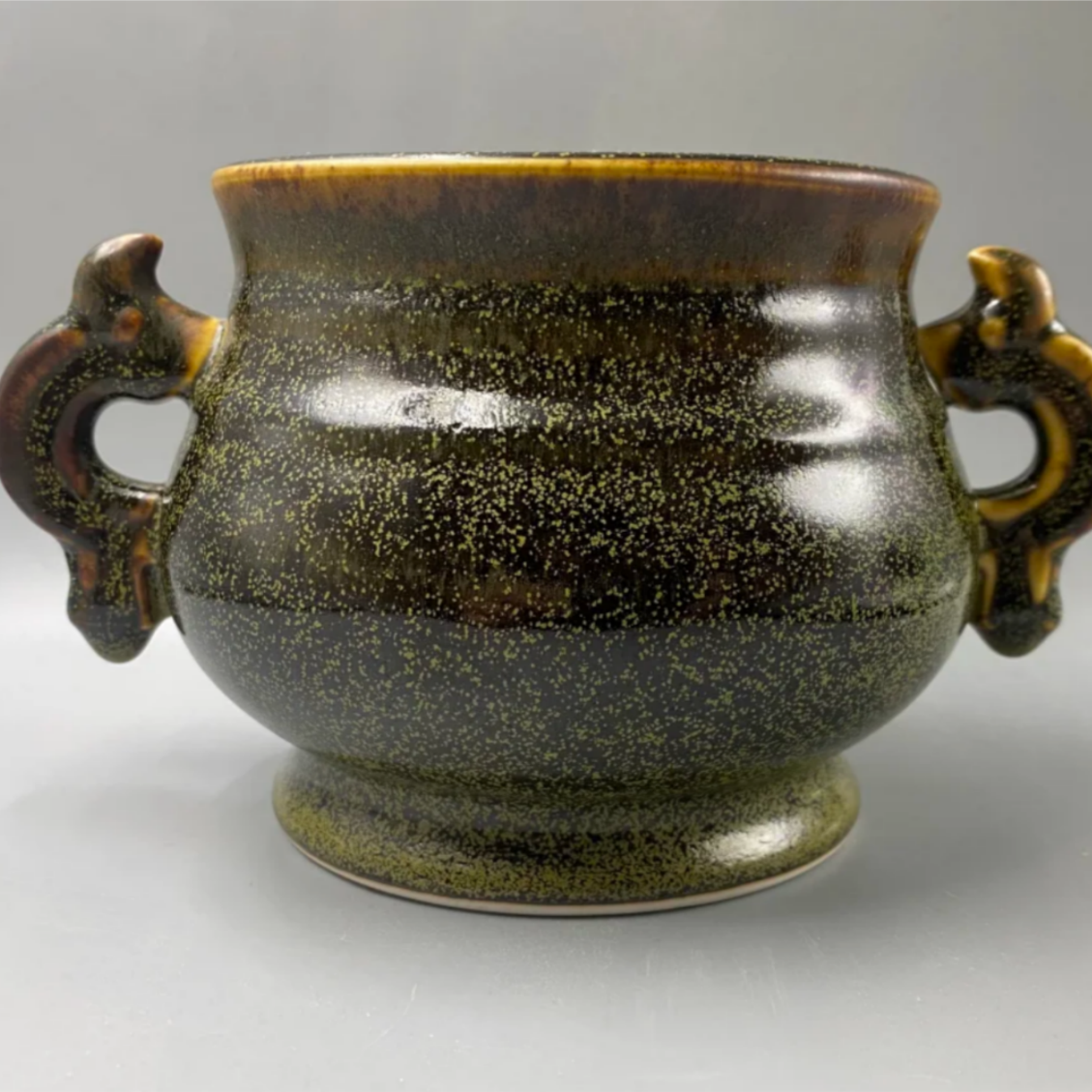
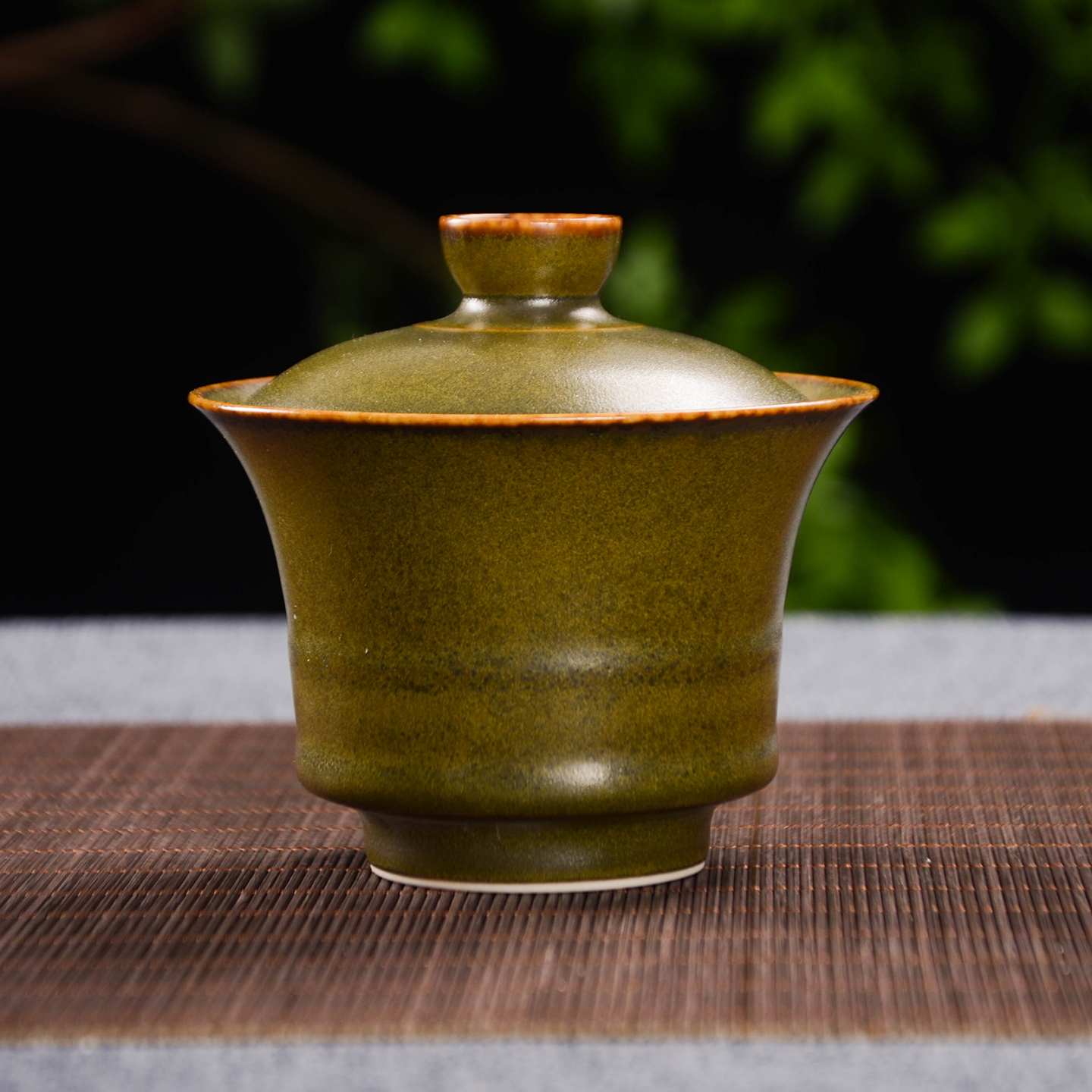
Tea-Dust Glaze: Distinguished by its olive-green tone and fine speckled surface, this glaze embodies quiet refinement and scholarly taste.
Among these, Tea-Dust Glaze stands out not for its brilliance but for its serenity — a true expression of understated Chinese elegance.
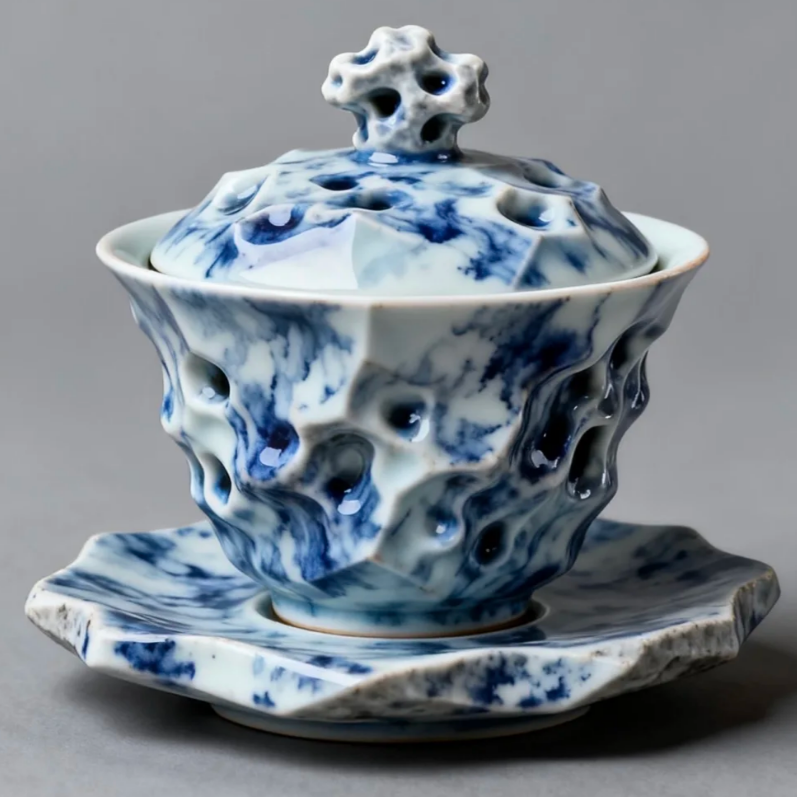
Blue-and-White Glaze
The Origin and Craft of Tea-Dust GlazeThe Tea-Dust Glaze, or Cha Ye Mo, first appeared in the Qing Dynasty (18th century). It was developed during the reign of Emperor Yongzheng and reached perfection under Emperor Qianlong, when imperial kilns in Jingdezhen began to experiment with new glaze formulas.
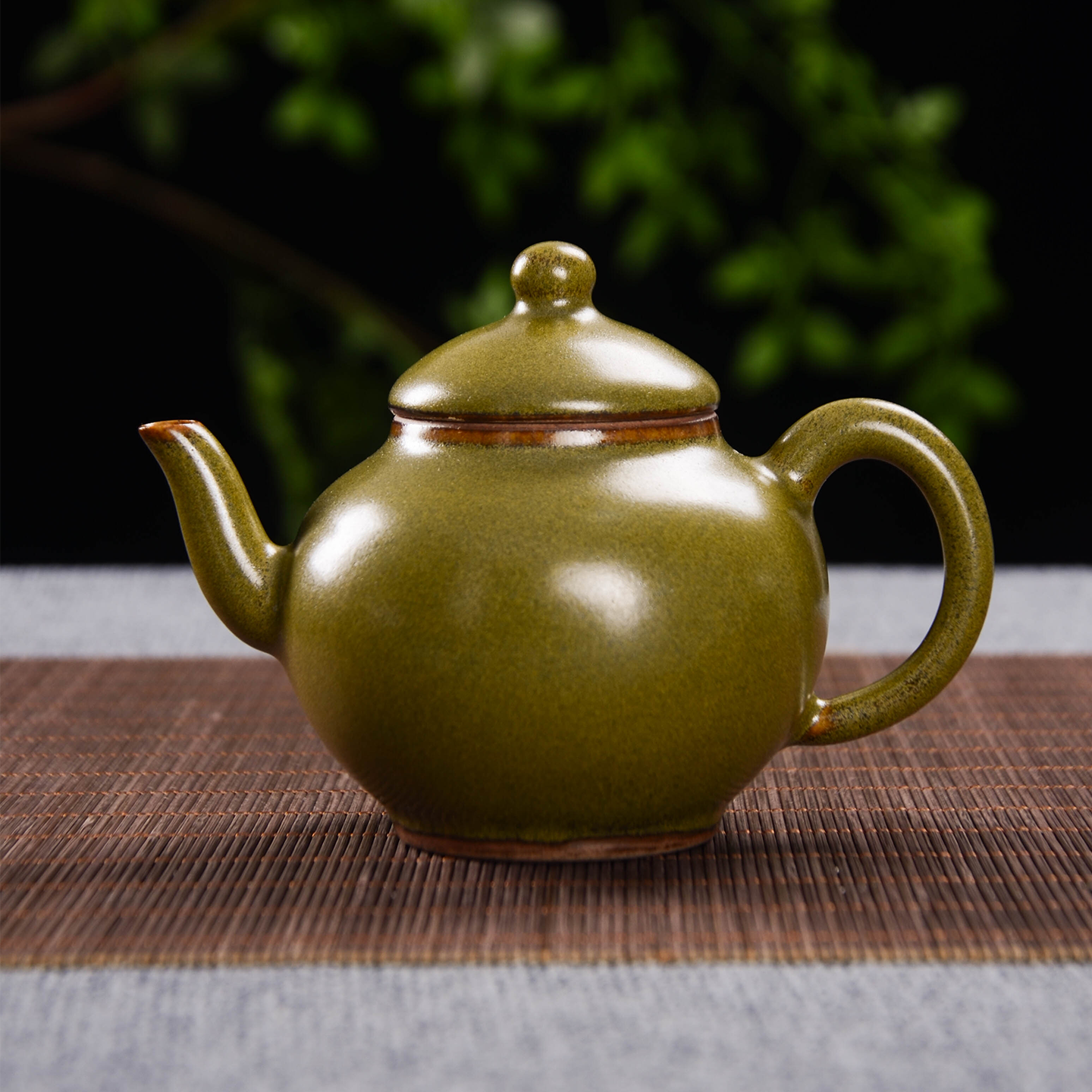
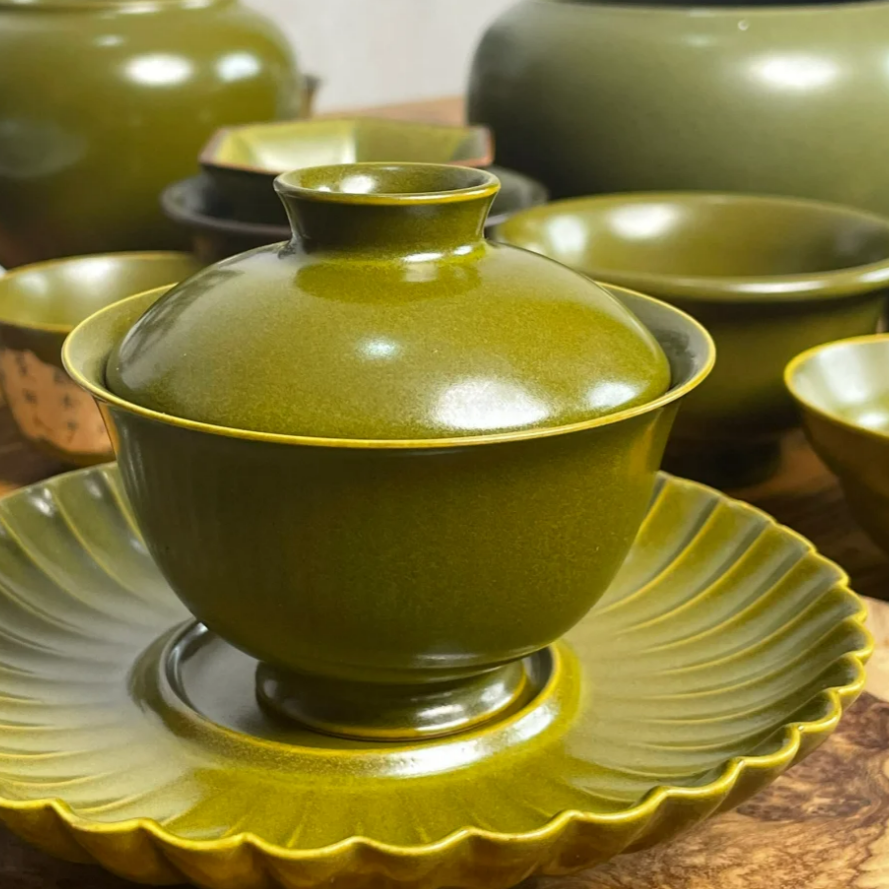
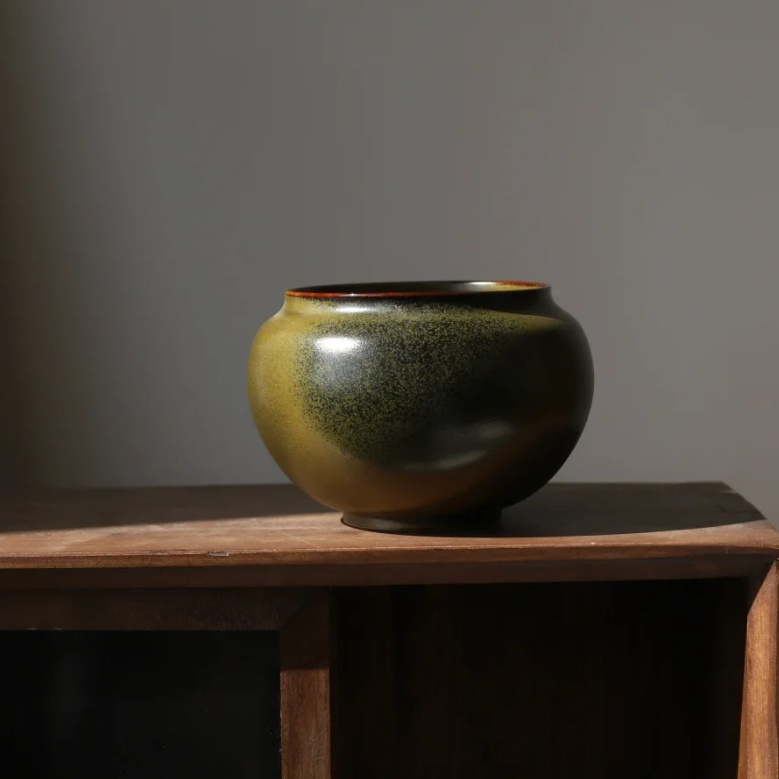
Its name derives from its appearance — a mellow olive-green color dotted with tiny golden-brown speckles, reminiscent of fine powdered tea leaves. This subtle texture results from iron oxide particles that crystallize on the surface during high-temperature firing (around 1300°C).
When viewed under natural light, a Tea-Dust Glaze reveals delicate layers of green, brown, and yellow tones, flowing together like mist over a forest hillside. It is neither flashy nor dull — it is balanced, calm, and deeply resonant with the Chinese philosophy of moderation and harmony.
Because the glaze’s outcome depends on minute variations in the kiln atmosphere, no two Tea-Dust pieces are ever identical. Each has its own character, reflecting the unpredictable beauty of nature and fire.
Aesthetic Meaning and SymbolismIn traditional Chinese art, color carries meaning. The olive-green tone of Tea-Dust Glaze symbolizes:
-
Harmony with Nature: The glaze’s earthy color reflects balance and connection with the natural world.
-
Prosperity and Calmness: Green is associated with growth, renewal, and stability — qualities valued by scholars and tea masters.
-
Inner Serenity: Its subdued tone invites contemplation, embodying the quiet strength of simplicity.
This is why Tea-Dust Glaze was often chosen for Gaiwans (lidded tea bowls) and teapots used by literati and monks. The calm hue mirrors the meditative state achieved during the tea ceremony — where fragrance, texture, and silence coexist.
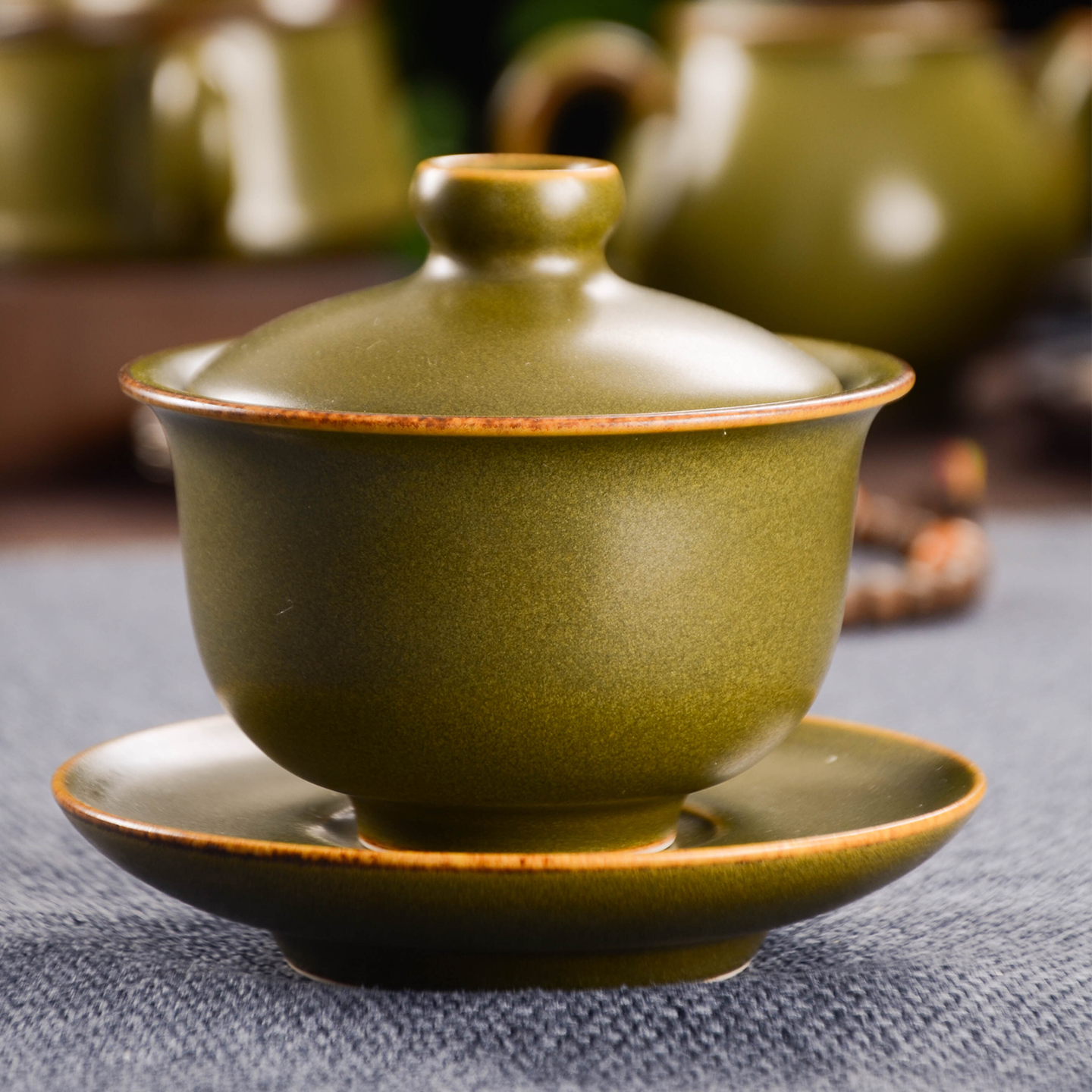
Functional and Artistic ValueBeyond its symbolism, Tea-Dust Glaze offers practical advantages. Its smooth yet slightly matte surface feels comfortable to the touch and enhances the tactile pleasure of brewing tea. The glaze’s neutral color complements all types of tea — green, oolong, black, or Pu’er — without altering their hue or aroma.
Each gaiwan or teacup made with this glaze represents a meeting of functionality and art. Whether it’s a Horse-Hoof Gaiwan, known for its stability and bold profile, or a Flared-Lip Gaiwan, appreciated for its graceful aroma diffusion, Tea-Dust Glaze brings a sense of quiet luxury to the tea experience.
Modern Revival of Tea-Dust GlazeToday, contemporary ceramic artists continue to reinterpret Tea-Dust Glaze in modern forms. While traditional Jingdezhen techniques remain the foundation,
modern kilns and refined clays have elevated its quality and consistency.
Designers appreciate its natural palette — a perfect match for minimalist interiors, Zen-style decor, and sustainable living aesthetics. Collectors value its authentic texture and kiln individuality,
which stand in contrast to mass-produced gloss finishes.
In recent years, the Tea-Dust Glaze Gaiwan has become a popular choice for Gongfu tea lovers worldwide, symbolizing the union of craftsmanship, culture, and calm living.
Why Tea-Dust Glaze MattersIn a world that often celebrates brightness and excess, Tea-Dust Glaze reminds us of the beauty of restraint. Its quiet tone encourages stillness; its imperfections tell the story of fire and time.
Owning a Tea-Dust Glaze ceramic is more than owning a teaware piece — it is embracing an aesthetic of mindfulness and authenticity, a continuation of the thousand-year dialogue between humans and clay.
Your tea deserves a vessel that matches its spirit. Explore our collection of handcrafted ceramic teaware, including elegant gaiwans, teapots, and teacups made in Jingdezhen—the world’s porcelain capital.
Each piece combines traditional artistry with modern aesthetics, designed to elevate every tea moment into a poetic ritual.


