When we hear the name The Silk Road, it often brings to mind camel caravans moving slowly across golden deserts, carrying precious silk, spices, and porcelain to faraway lands. But the Silk Road was much more than a trade route—it was a bridge that connected civilizations, a path where ideas, religions, art, and technology traveled alongside goods.
When we hear the name
The Silk Road, it often brings to mind camel caravans moving slowly across golden deserts, carrying precious silk, spices, and porcelain to faraway lands. But the Silk Road was much more than a trade route—it was a bridge that connected civilizations, a path where ideas, religions, art, and technology traveled alongside goods. In ancient times,
the Silk Road was an network of trade routes that connected the East and the West, playing a crucial role in cultural, commercial, and technological exchange for more than a thousand years. Originating during the Han Dynasty of China (206 BCE–220 CE), the routes extended across Asia, linking China with Central Asia, the Middle East, and Europe.
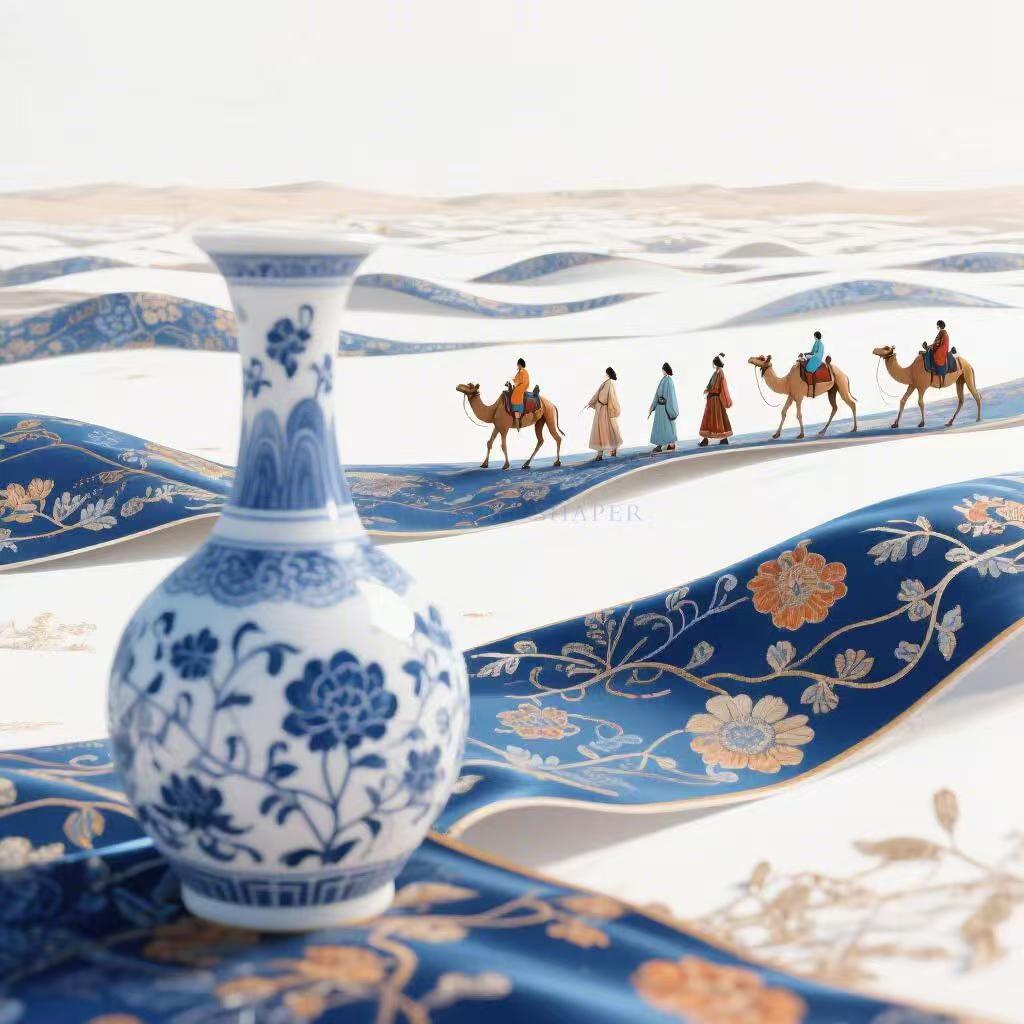
Although named after silk—one of the most valuable commodities exported from China—
the Silk Road carried a wide range of goods including ceramics, tea, spices, precious metals, glassware, and textiles. More importantly, it served as a bridge for the exchange of ideas, religions, art, and scientific knowledge, profoundly influencing the development of civilizations along its path. The trade of
ceramics along
the Silk Road stands as a significant chapter in history. For centuries, Chinese ceramics, renowned for their exquisite craftsmanship, durability, and beauty, were highly prized luxury goods in Central Asia, the Middle East, and even as far as Europe. The transport of these fragile items was a complex undertaking that involved careful packaging, long-distance caravan routes, and a vibrant exchange of cultures and techniques. The demand for Chinese porcelain eventually spurred technological innovation in other regions, notably in the Islamic world and later in Europe.
The journey of ceramics along
the Silk Road was meticulous. First, the fine porcelain, celadon, and other wares produced in kilns in places like Jingdezhen were transported over rivers and canals to major trading hubs such as Chang‘an (modern Xi’an). There, they were packed with immense care. They were often wrapped in straw or paper, packed in wooden crates or barrels, and surrounded by absorbent materials like tea leaves, beans, or soil to prevent breakage during the arduous journey. Loaded onto camels and horses, these precious caravans traversed the treacherous deserts and mountain passes of the Hexi Corridor, crossing into Central Asia. Merchant caravans moved from one oasis town to the next, where goods would be traded, and caravans might change hands. The ceramics would pass through markets in Samarkand and Baghdad before reaching their final destinations in the Mediterranean or Europe. The entire process was slow and perilous, taking months or even years, which contributed to the immense value of these goods abroad.

Jingdezhen porcelain possesses unique advantages in the production of ceramic ware. Jingdezhen, renowned as the "Porcelain Capital" of the world, is celebrated for its exceptional quality and exquisite craftsmanship. Its four defining characteristics are often summarized by the classic phrase: "As white as jade, as bright as a mirror, as thin as paper, and as resonant as a chime stone." Jingdezhen porcelain is not merely utilitarian but also a high art form. It integrates painting, calligraphy, and sculpture. The decorations often carry auspicious symbolism, such as peonies for wealth and honor and lotus flowers for purity, reflecting profound traditional Chinese cultural values. Beyond the four core characteristics, Jingdezhen's excellence is demonstrated through its diverse techniques and styles:
Blue and White Porcelain:
The most famous representative of Jingdezhen.
Famille Rose Porcelain:
Developed in the Qing Dynasty, this represents the peak of overglaze enamel decoration.
Linglong porcelain:
Also known as Rice-Pattern Porcelain. Intricate rice-grain-shaped patterns are carved out of the body, which are then filled with glaze.
Monochrome Glaze Porcelain:
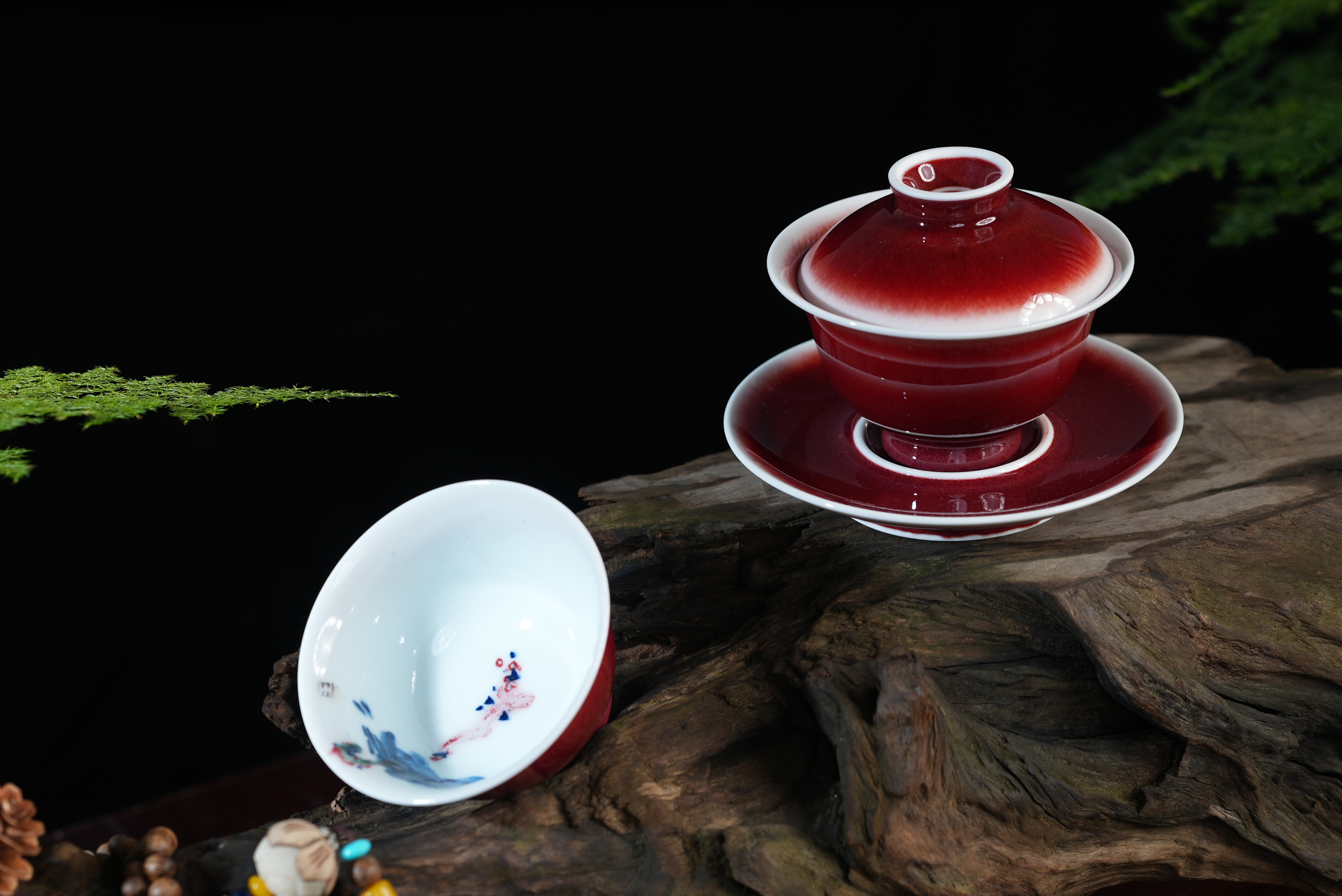
This technique uses various metallic oxides as colorants, which naturally form stunning glaze colors during firing.
In summary, the characteristics of Jingdezhen porcelain lie in: superior raw materials (kaolin clay), c
enturies of masterful craftsmanship, a vast repertoire of styles and decorative techniques, a perfect fusion of practicality and artistry. It was these very qualities that made Jingdezhen porcelain one of the most coveted Chinese commodities along the Silk Road, profoundly influencing ceramic production worldwide. Our brand Ceramicpavilion is unique and famous in Jingdezhen. Choosing our company and porcelain art you will not regret.
The Silk Road was not a single road but a vast network of land and maritime routes. Overland caravans traveled through deserts, mountains, and oases, while maritime routes connected ports along the South China Sea, the Indian Ocean, and the Persian Gulf. Beyond trade, the Silk Road fostered cultural interaction and mutual learning. Buddhism, Islam, and other religions spread along its pathways, while art, architecture, and technology crossed borders, leaving lasting legacies in many regions.
Today, the Silk Road is recognized as a symbol of global exchange and cooperation, celebrated for its role in shaping world history and inspiring the concept of cultural connectivity.


