The Langyao Red Gaiwan, with its deep crimson glow and fluid beauty, is not just a tea vessel. It is a reflection of the centuries-old artistry of Jingdezhen, the porcelain capital of the world, and of the ancient Chinese pursuit of harmony between nature and craftsmanship.
The Radiance of Fire and Earth: Langyao Red Gaiwan
In the world of Chinese ceramics, few glazes capture the human spirit quite like
Langyao Red—a color born from the dance between fire and earth, chance and mastery. The
Langyao Red Gaiwan, with its deep crimson glow and fluid beauty, is not just a tea vessel. It is a reflection of the centuries-old artistry of
Jingdezhen, the porcelain capital of the world, and of the ancient Chinese pursuit of harmony between nature and craftsmanship.
The Oringin of Langyao Red
The Langyao glaze traces its origin to the Kangxi reign (1662–1722) of the Qing Dynasty. It was developed under the supervision of Lang Tingji, the governor of Jingdezhen, whose experiments in kiln firing led to this legendary copper-red glaze. From his name “Lang,” the term “Langyao” was born—forever marking a chapter of brilliance in the history of Chinese porcelain.
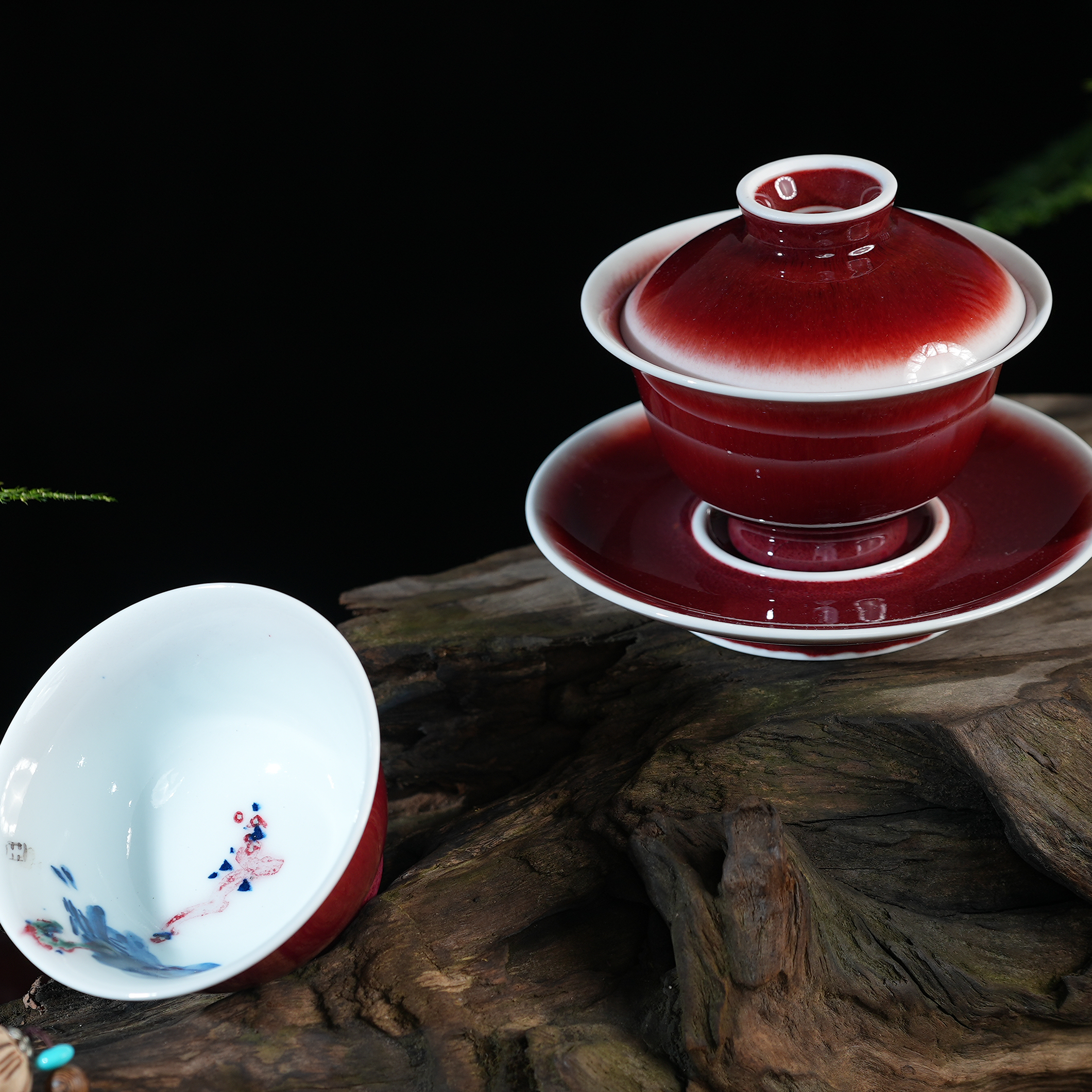
Unlike ordinary red glazes, Langyao Red possesses layers of depth and emotion. The surface is smooth like jade, yet rich with subtle transitions—from deep ruby at the rim to soft rose and pale pink near the foot. This unique color gradient, often described by collectors as “crimson flowing into white,” is not achieved by brush or pigment, but by the unpredictable alchemy of the kiln. Every firing produces surprises; no two pieces are ever identical.
The copper-based glaze is famously difficult to control. It requires
precise timing, temperature, and atmosphere within the kiln’s reducing flame. Even the slightest imbalance in oxygen or heat can turn red to brown or gray. That is why each successful Langyao Red piece is considered a triumph of skill and patience—a meeting of art and luck.
The Elegance of the Gaiwan
The Gaiwan—composed of a lid, a bowl, and a saucer—is one of the most essential vessels in Chinese tea culture. It represents the unity of Heaven (the lid), Earth (the saucer), and Humanity (the bowl)—a harmonious triad that reflects the philosophy of balance and respect in every tea ceremony.
When paired with the Langyao glaze, the Gaiwan transforms into an object of serene beauty. The red glaze embodies warmth, passion, and vitality; the porcelain beneath it exudes refinement and purity. Together, they form a poetic contrast that mirrors the yin and yang of existence. As the tea steeps inside, the deep crimson surface glows softly, as if the memory of the kiln’s fire still flickers within.
Craftsmanship of Langyao Red Gaiwan
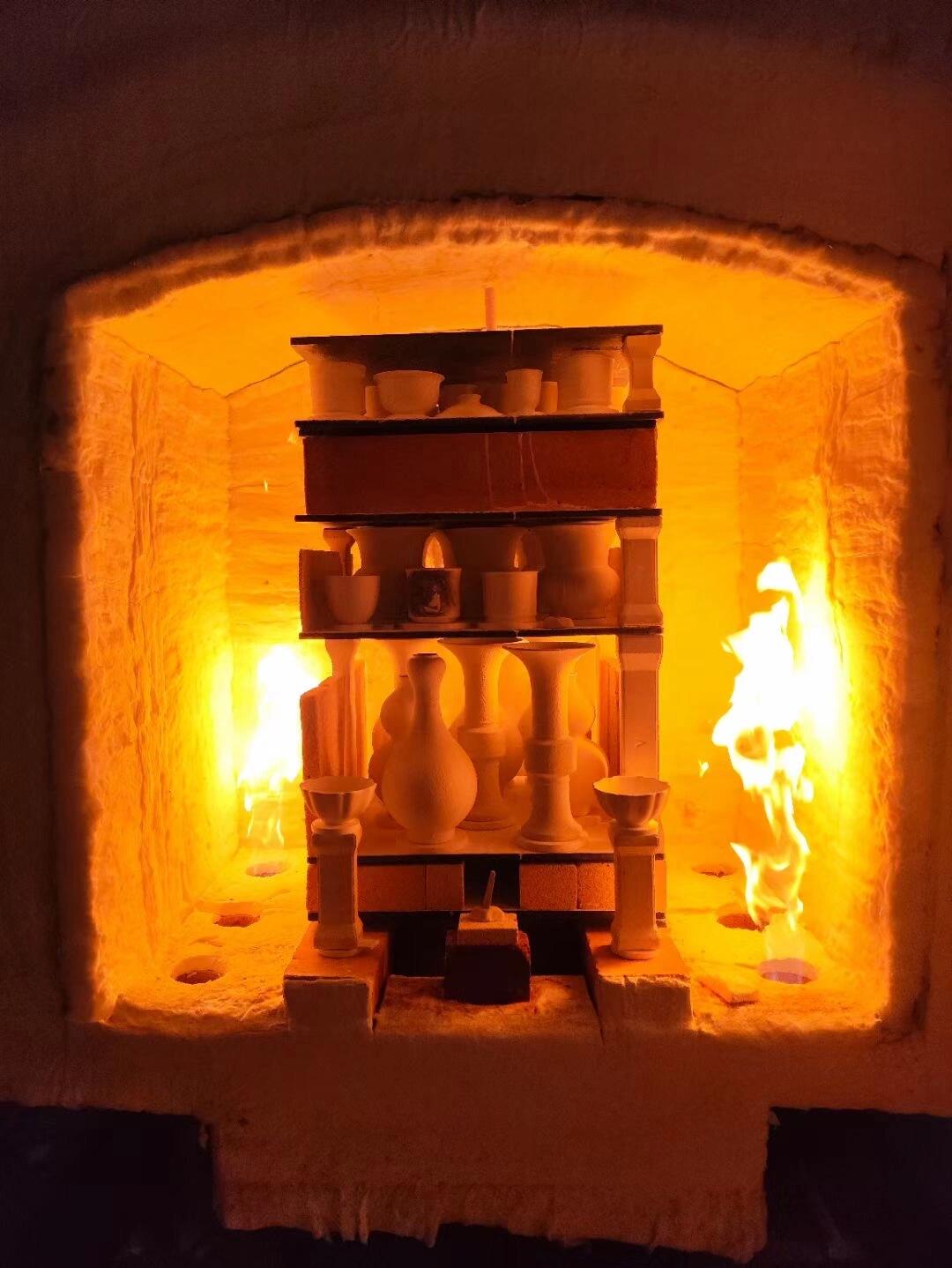
Creating a Langyao Red Gaiwan requires more than technical skill—it demands intuition and reverence for the unseen forces of nature. Artisans begin by selecting fine kaolin clay from Jingdezhen, known for its whiteness and plasticity. After shaping the Gaiwan, it is coated with copper-red glaze, then fired in a high-temperature reduction kiln at over 1300°C.
During this process, copper ions react with the flames in mysterious ways, forming shades that range from ruby to rose to coral. This transformation cannot be entirely predicted or repeated, even a slight deviation in temperature or atmosphere can alter the final hue, which is why the Langyao Red glaze is often described as
“the color that comes from Heaven’s will.” Each piece that emerges intact from the kiln is a small miracle—evidence of both human artistry and nature’s blessing.
Beyond Function: A Collector’s Treasure
For tea enthusiasts, the Langyao Red Gaiwan offers an elevated sensory experience. Its porcelain body retains heat well, enhancing the fragrance and flavor of the tea. The smooth inner surface allows tea leaves to unfurl gracefully, and the wide lid ensures a balanced pour. Whether used for green tea, oolong, or pu’er, it transforms an ordinary tea session into a moment of quiet ceremony.
For collectors and art lovers, the appeal goes far deeper. The Langyao Red Gaiwan is a fusion of culture, technology, and emotion—a living link between past and present. Its glaze, unpredictable yet graceful, mirrors the rhythm of nature and the philosophy of wabi-sabi—the beauty found in imperfection and impermanence.
The Spirit of Jingdezhen
The town of
Jingdezhen, nestled in the hills of Jiangxi Province, has been firing porcelain for over a thousand years. Known as the
“Porcelain Capital of the World,” it has witnessed dynasties rise and fall, yet its kilns continue to burn. Here, the spirit of the Langyao Red glaze lives on, carried by generations of artisans who still chase that perfect moment of red—the instant when flame, clay, and copper meet in harmony.
The Langyao Red Gaiwan, therefore, is not just a product—it is
a vessel of history and heritage. Each piece tells a story of endurance, creativity, and devotion. Holding one in your hand is to touch the legacy of centuries, to feel the quiet power of craftsmanship that time cannot fade.
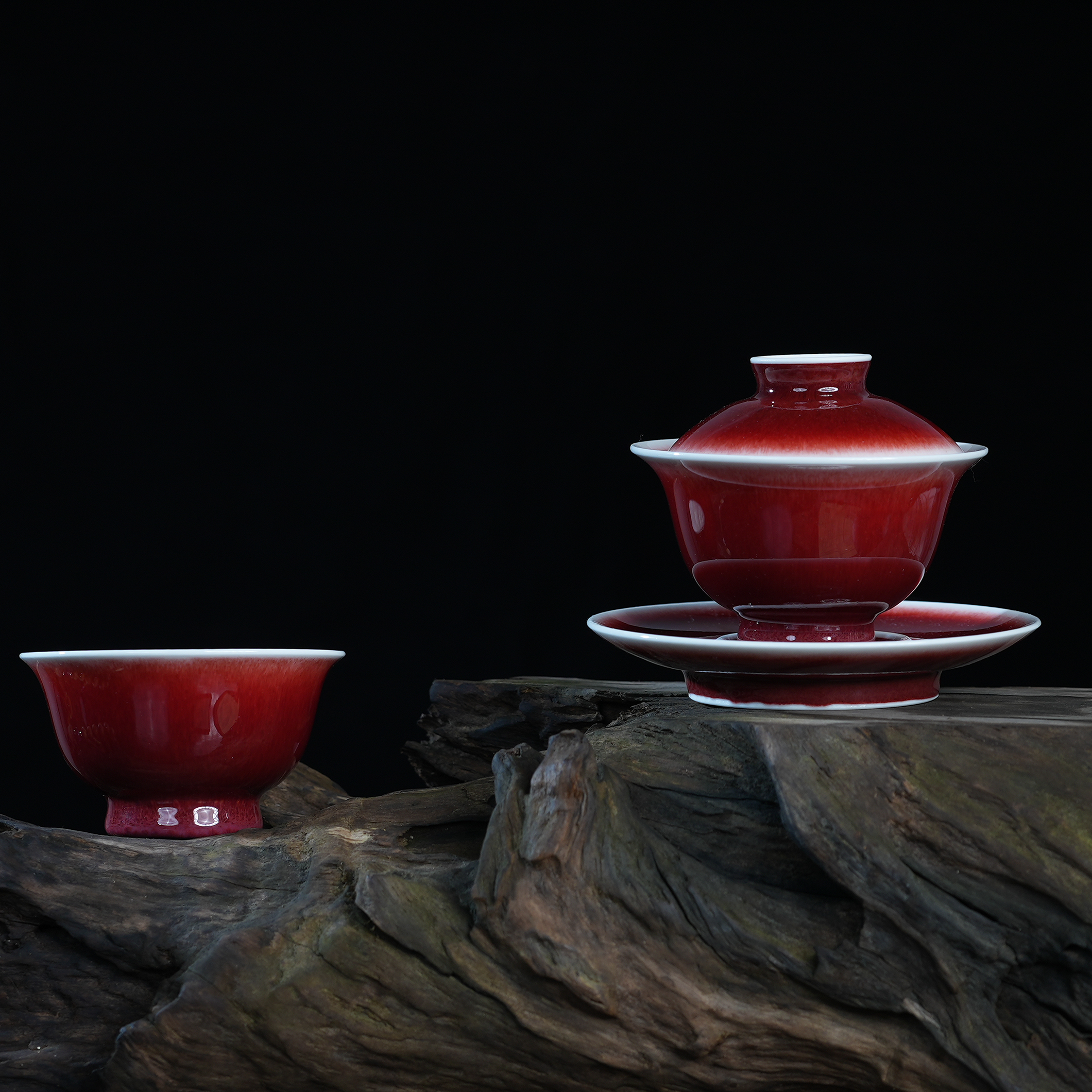
Under sunlight, the Langyao Red Gaiwan gleams with a glow that feels alive. Its crimson depth evokes warmth, elegance, and serenity. In the stillness of tea, as steam rises and fragrance unfolds, one can almost sense the heartbeat of the kiln—the eternal conversation between fire and earth.
The Langyao Red Gaiwan is not merely porcelain; it is a poem in color, a meditation in glaze, and a reflection of the soul of Jingdezhen.


